When Growth Becomes the Problem: Rebuilding Operations at Scale
Company: projekt202 | Role: Director of Business Operations | Timeframe: 2021–2022
The Situation
projekt202 was, by any measure, a success story. A UX and technology consulting firm with a reputation for exceptional work, it had grown from roughly 300 to nearly 950 employees in two years through a series of acquisitions and had itself been acquired by Amdocs, a global software company. On paper, the trajectory looked great.
In practice, the organization was fracturing.
Each office operated as its own fiefdom. Processes were tribal. Knowledge lived in six competing wikis, intranets, and shared drives: none of them authoritative, all of them inconsistent. Employees were touching 15 to 30 different applications in a single workday, spending hours hunting for basic information and relying on personal networks to get anything done. The company's time-tracking tool inspired such widespread resentment that employees filled a survey with 83 organic comments, most unprintable, about how much they hated it. Post-acquisition integration was fragile. Leadership was misaligned. And no one had a clear picture of what "one company" was supposed to look like.
This is a common failure mode for fast-growing organizations. Individual excellence masks systemic dysfunction, until it doesn't.
When I stepped into the newly created Director of Business Operations role, there was no team, no infrastructure, and no shared understanding of what needed to change first. My job was to figure that out.
The Approach
Start with listening, not solutions
Before proposing anything, I needed to understand the full picture: not just what leadership thought was broken, but what employees actually experienced every day. I partnered with an Experience Strategy Architect to design and field a company-wide Employee Experience survey, which drew 211 responses across six offices (44% of eligible employees). We followed it with stakeholder interviews across functions, offices, and levels of seniority.
What we found confirmed the intuition but added precision. Employees scored their experience across five dimensions:
Resources & Information: 3.18 / 5
Productivity & Collaboration: 3.75 / 5
Training on Tools: 2.67 / 5(the lowest score, with nearly a quarter of open-field responses asking "what training?")
Operational & IT Support: 3.99 / 5
Company overall: 3.61 / 5
The data told a clear story: employees weren't struggling because they lacked tools. They were struggling because nothing connected, nothing was documented, and the only reliable way to get something done was to know the right person to ask. That model doesn't scale.
Brand the work intentionally
I named the transformation program Chrysalis — deliberately. A named program with a logo, a roadmap, and visible executive sponsorship isn't vanity; it's change management. It signals seriousness, creates a shared vocabulary, and limits the sprawl that happens when every team tries to solve the same problem independently. I roadshowed the program to the executive steering committee (CEO, CFO, CTO, President) and presented findings to Amdocs leadership, securing alignment at both levels before any implementation began.
Sequence for maximum impact and momentum.
With a prioritized backlog in Jira and a phased roadmap, we launched Chrysalis projects in parallel workstreams, each with a named owner, a steering committee, and defined success criteria. The work touched nearly every operational domain: knowledge management, tools and systems, internal communications, the employee lifecycle, resourcing, and acquisition integration.
What We Built
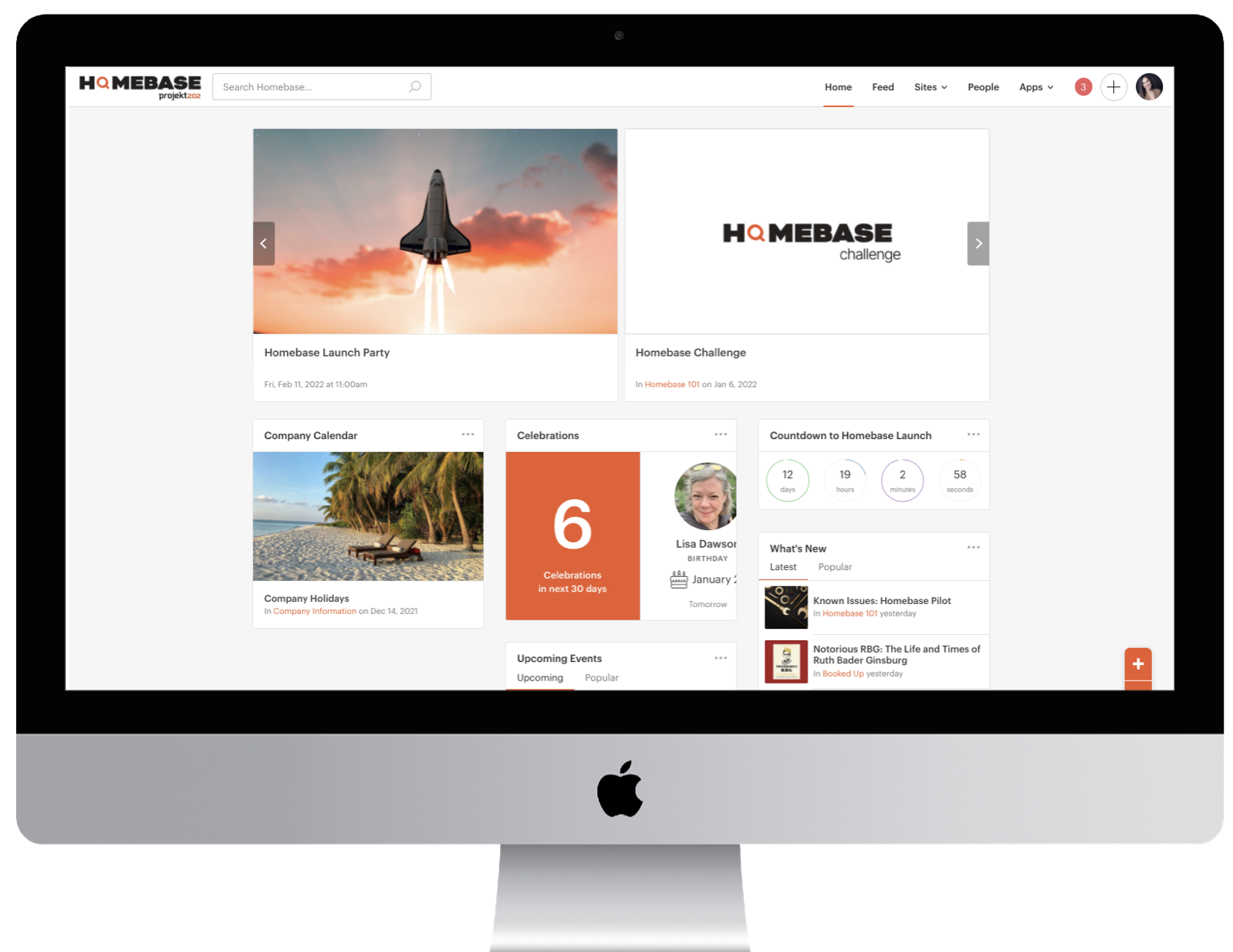
Homebase: a unified intranet to replace six
Six competing knowledge bases, wikis, and intranets became one. Built on Simpplr and integrated with BambooHR, OneLogin, and Slack, Homebase launched with the highest-impact company content in a single, searchable, role-relevant place: policies, benefits, business processes, IT support guides, office information, executive communications, and training resources. Employees could personalize their dashboard and subscribe to the sites most relevant to their role and office. Wave 2 and Wave 3 roadmaps, covering sales, case study management, additional integrations, an annual maturity assessment, and a KPI dashboard, were handed off to the team with clear ownership.
Procurement, redesigned
A disjointed process spread across SharePoint and email, with no visibility, no accountability, and no consistency, was replaced with a structured intake and approval workflow in Jira Service Management. End-to-end processing time dropped from 10+ days to 4.
OpenAir, finally replaced
After years of employee frustration with the company's time-tracking and professional services automation tool, we navigated Amdocs approval to replace OpenAir with FinancialForce, consolidating resourcing, time tracking, expenses, and reporting into Salesforce and dramatically simplifying the operational systems landscape.
IT Service Desk, overhauled
Automated ticket assignment, improved ITSM reporting, and clearer escalation paths replaced a reactive, manual support operation.
The Results
~50% reduction in unnecessary support tickets following the launch of self-service FAQs and process guides
37.5 person-hours per week saved in operational support, approximately $72,000 in annual cost savings
17+ hours per year saved per employee previously spent searching for information, asking the wrong person, or navigating broken systems
Procurement cycle cut by more than half: 10+ days to 4 days
80% adoption rate on the internal knowledge base
3 system integrations live at Homebase launch, with a funded roadmap for continued build-out
What This Was Really About
The metrics matter. But the harder thing, the thing that doesn't fit in a bullet point, was convincing a fractured organization that it was worth trying to become one.
That required listening before designing. Naming the problem so people could see themselves in it. Building a roadmap ambitious enough to be credible and phased enough to be executable. Earning trust with executives who had competing agendas, and with employees who had been promised change before and seen nothing happen.
Chrysalis wasn't a technology project. It was a people project. The systems were just the evidence that it worked.